

A new digital service announced in Pakistan can quickly generate excitement, especially if it promises faster payments, easier access to government services, or a more connected economy. But the phrase alone doesn’t confirm what the service does, which organisation runs it, or when ordinary users will be able to use it. Those details matter.
Pakistan’s move toward digital systems affects daily transactions, mobile users, businesses, and public administration. Separating an official rollout from an early proposal or social-media claim helps people make safer decisions and understand what the development may realistically change.
The term “new digital service” can describe many different things. It may refer to a government portal, a digital payment platform, an identity-verification tool, an online licensing system, a telecom feature, or an initiative connected to financial technology.
Without a named service, official notice, launch date, or operating authority, it would be inaccurate to claim that one specific platform has already launched across Pakistan. A responsible reading of any announcement starts with the basics: who announced it, what problem it solves, who can use it, and whether it is live or still being developed.
Three questions that clarify any announcement
- Who is responsible? Look for confirmation from the Pakistan government, a regulator, a bank, a telecom operator, or another clearly identified institution.
- What is the service for? Payments, records, identity checks, welfare delivery, and mobile connectivity each have different benefits and risks.
- What is the launch status? A policy discussion, pilot programme, limited rollout, and nationwide service are not the same thing.
These distinctions are particularly important in a country where mobile wallets, online banking, QR payments, government portals, and app-based services are expanding at different speeds.
Why Digital Services Matter in Pakistan
Digital tools can reduce paperwork and give people a quicker way to complete routine tasks through a phone or computer. For businesses, digital payment options may help record sales, accept money remotely, and serve customers who prefer cashless transactions.
The wider impact depends on access. A system in Pakistan can only be useful at scale if it works reliably, supports local languages where needed, protects user data, and remains accessible to people with limited digital skills or inconsistent internet access.
Potential benefits for users and businesses

- Faster transfers and more convenient bill or service payments
- Less need to visit offices for eligible government processes
- Clearer digital records of transactions
- Broader access to formal financial services for eligible users
- More efficient delivery of certain public or private-sector services
None of these outcomes should be assumed simply because a service was announced. Design, regulation, customer support, fees, network coverage, and public trust will decide whether it becomes useful in everyday life.
Digital Payments, Digital Currency, and Government Portals Are Different
Discussion around a new digital service announced in Pakistan often turns quickly to digital currency. That’s understandable, but a digital payment service is not automatically a central bank digital currency, and neither is the same as cryptocurrency.
| Type of digital service | Main purpose | Typical operator | What users should confirm |
|---|---|---|---|
| Digital payment platform | Send, receive, or pay money electronically | Bank, fintech company, wallet provider, or payment scheme | Fees, limits, account requirements, fraud controls, and support |
| Government e-service | Provide documents, applications, records, or public services online | Federal, provincial, or local government department | Official domain, eligibility, required documents, and privacy policy |
| Central bank digital currency | Digital form of sovereign money, if officially created | Central bank | Legal status, pilot scope, wallet access, and formal regulations |
| Cryptocurrency product | Trade, hold, or transfer a crypto asset | Private platform or decentralised network | Regulatory position, volatility, custody, and scam risk |
Is Pakistan launching a digital currency?
A digital currency launch should only be treated as confirmed after a clear official announcement identifies the issuer, legal framework, user access method, and rollout plan. A news headline about digital finance, blockchain, payment modernisation, or a regulatory discussion does not by itself prove that a national digital currency is available to the public.
For the most reliable updates on monetary policy and formal financial-sector initiatives, check the State Bank of Pakistan’s official website rather than relying on screenshots, forwarded messages, or unofficial app links.
How to Check Whether a Digital Service Is Official
Fraudsters often borrow the language of public projects, new technology, and instant payments to make fake offers appear credible. A genuine public or financial service should have a clear operator, transparent terms, and a verifiable official channel.
A practical verification checklist
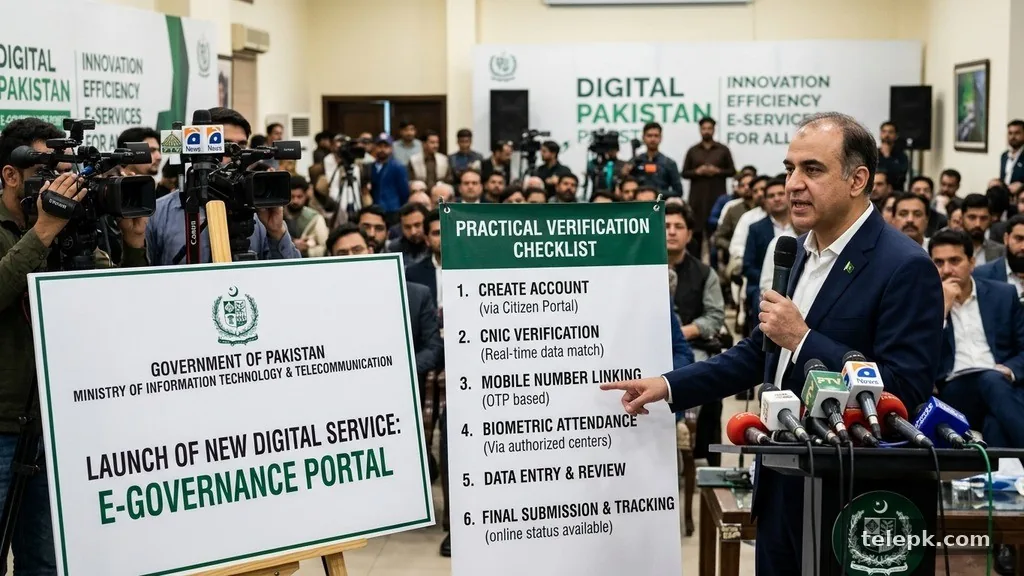
- Find the original announcement on the official website or verified public channel of the responsible institution.
- Check whether the announcement names the service, its purpose, eligibility rules, and availability timeline.
- Review the website address carefully before sharing a CNIC number, bank details, verification code, or biometric information.
- Read the privacy policy and terms before installing an app or registering an account.
- Confirm whether support is available through official helplines, branches, or documented customer-service channels.
- Ignore offers that demand an upfront payment, a one-time password, or urgent action to “activate” a government benefit.
A legitimate service may require identity checks, but it should not require users to disclose sensitive credentials through random calls, chat messages, or unverified links.
What Could Change for Everyday Users?
If a properly governed digital public or payment service moves from announcement to rollout, the most noticeable change may be convenience. People could complete selected tasks through a mobile device rather than travelling to an office, waiting in a queue, or handling paper forms.
For small businesses, a more reliable payment infrastructure could support instant settlement options, clearer bookkeeping, and more ways for customers to pay. Yet cash is likely to remain important for many people, particularly where connectivity, device access, or digital confidence is limited.
Issues that need careful attention
Convenience should not come at the cost of privacy or exclusion. Any major digital system needs safeguards for personal information, accessible complaint handling, clear rules for disputed transactions, and alternatives for users who cannot rely on smartphones or stable data coverage.
Interoperability matters too. A new platform is more practical if it can work alongside established banks, payment services, and government databases within lawful and secure limits, rather than forcing people into a confusing separate process.
Is Pakistan Ready for a Bigger Digital Shift?
Pakistan has strong reasons to expand digital infrastructure: a large mobile-user base, growing demand for online services, and an economy that can benefit from more efficient payment and record-keeping systems. The foundation already includes mobile connectivity, banking channels, digital wallets, and public-sector databases.
Readiness, however, is not a simple yes-or-no question. Digital progress depends on affordable access, cybersecurity, consumer protection, financial literacy, dependable electricity and networks, and rules that institutions can apply consistently.
The country does not need to copy the most digitalized nation in the world to make meaningful progress. A service that solves one local problem clearly and securely is more valuable than a high-profile launch that leaves users confused or exposed.
What This Is Not: Satellite News and Unrelated Tech Claims
Pakistan’s technology news can include satellite launches, telecom upgrades, software initiatives, and financial-service developments at the same time. These are separate areas. A satellite mission may support communications, research, mapping, or national technology goals, but it does not automatically create a consumer digital payment or government-service platform.
That distinction helps prevent misleading headlines. Before sharing a claim, check whether it concerns space technology, mobile network infrastructure, digital identity, online public services, or financial transactions. Each area has different authorities, timelines, and practical effects.
What to Watch for Next
The most meaningful information will be concrete rather than promotional. A credible rollout should explain who is eligible, which cities or institutions are included, how users register, what data is collected, what costs apply, and where help is available.
People should also watch for public guidance on security. New services often attract imitation websites and fraudulent messages before users become familiar with the official process. Taking a few minutes to verify the source can prevent a much bigger problem later.
Frequently Asked Questions
What is the new digital service announced in Pakistan?
The phrase may refer to a payment, government, telecom, identity, or financial-technology initiative. Unless an official announcement names the service and its operator, its exact function should not be assumed.
Has Pakistan officially launched a digital currency?
A national digital currency should only be considered launched if the relevant official authority confirms its legal status, operating model, availability, and user access. General digital-finance news does not confirm a public launch.
How can I tell if a government digital-service message is real?
Verify it through the responsible institution’s official website or recognised public channel. Do not use links sent in unsolicited messages, and never share passwords, PINs, or one-time verification codes.
Will digital services replace cash in Pakistan?
Not necessarily. Digital tools can add convenient payment and service options, but cash may remain important for users who prefer it or have limited connectivity, device access, or formal banking access.
Are digital payments safe to use?
They can be safe when provided by regulated or legitimate operators and used carefully. Protect account credentials, enable available security features, verify recipients, and report suspicious activity promptly.
Final Thoughts
A new digital service announced in Pakistan could signal useful progress, particularly if it makes public services or payments simpler without excluding people who need offline support. The announcement itself is only the starting point. Clear rules, secure technology, honest communication, and dependable customer help will determine its real value.
Before registering, downloading an app, or sharing personal information, wait for confirmed details from the responsible authority and read the service terms carefully. Digital progress works best when it is practical, trustworthy, and built around the needs of the people expected to use it.