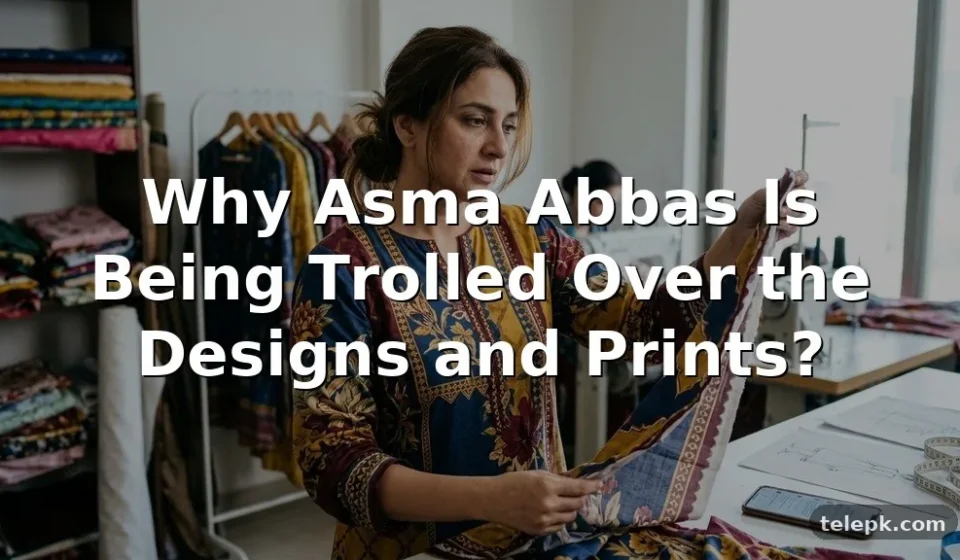

Asma Abbas is once again being discussed online after social media users criticised the designs and prints associated with a recent public appearance or fashion post. The word “cheap” reflects online opinion, not an independently confirmed assessment of the clothing or its quality. That distinction matters, especially when a celebrity’s outfit becomes the centre of a fast-moving debate.
The reaction also raises familiar questions about celebrity styling, personal taste, and the way social platforms turn fashion criticism into entertainment news. Here’s what can responsibly be said about the controversy, why the designs attracted attention, and how readers should treat unverified claims about Asma Abbas’s personal life or latest work.
The phrase “Asma Abbas trolled again” appears to describe renewed criticism from social media users who disliked the visual appearance of clothing linked to the actress. Their complaints reportedly focus on the prints, colour combinations, styling, or perceived finish rather than on a confirmed technical fault with the garments.
Online fashion criticism is subjective. A bold print that looks old-fashioned to one viewer may appear traditional, expressive, or perfectly suitable to another. Without a clearly identified designer, original post, event, or full-resolution image, it isn’t possible to verify precisely which outfit triggered the discussion or whether every claim being repeated online refers to the same appearance.
What Is Confirmed and What Remains Unclear?
The headline establishes that Asma Abbas is the subject of an online fashion debate, but it doesn’t by itself prove that the clothing was poorly made or inexpensive. Social media captions often turn an opinion into a definitive-sounding statement, and reposts can remove the original context.
| Point of discussion | What can reasonably be said | What should not be assumed |
|---|---|---|
| Online criticism | Some users appear to have expressed negative opinions about the styling. | That every viewer disliked the outfit or that criticism represents a wider consensus. |
| “Cheap” designs | The term describes a perception about appearance, styling, or finish. | The actual price, fabric quality, or designer’s production standards. |
| Prints and colours | These are common areas of disagreement in fashion discussions. | That a particular combination is objectively unattractive. |
| “Again” in the headline | It suggests a repeated pattern of online commentary. | A complete, verified record of earlier incidents or public criticism. |
Why Celebrity Fashion Criticism Spreads So Quickly
Fashion images are easy to share, crop, caption, and debate. A short post can reach a large audience before the original styling details, event context, or designer information are known. Sarcastic comments then become part of the story, particularly when entertainment pages repost them as evidence of a “trolling” trend.
Several factors often make these discussions more intense:
- Strong visual choices: Large motifs, busy prints, or contrasting colours naturally attract immediate reactions.
- Generational style preferences: Traditional clothing may be judged differently by younger and older audiences.
- Celebrity visibility: A familiar public figure receives more attention than an unknown wearer in a similar outfit.
- Short-form commentary: A brief joke or insult can spread faster than a thoughtful explanation.
- Recycled controversy: Older criticism may be reposted alongside a new image, creating the impression of one continuous incident.
Is Calling a Design “Cheap” Fair?
Not necessarily. “Cheap” can refer to the perceived look of a print, but it can also be used as a careless insult aimed at the wearer. Those are different things. A design may be inexpensive, mass-produced, heavily embellished, deliberately modest, or simply outside a viewer’s taste, and none of those descriptions can be confirmed from an image alone.
A more useful fashion critique identifies the specific issue. For example, a viewer might discuss whether the print overwhelms the silhouette, whether the colours compete, or whether the accessories suit the outfit. That approach is more informative than reducing the entire look to a personal attack.
Asma Abbas’s Public Image and Entertainment Career
Asma Abbas is known as a Pakistani television and film actress with a long-standing presence in entertainment. Like many established performers, she is discussed not only for acting projects but also for interviews, public appearances, family connections, and social media coverage.
That visibility can blur the line between celebrity reporting and speculation. Questions about her husband, age, daughter, or latest drama should be answered only through reliable public information. A viral fashion post doesn’t confirm private-life details, and online comments shouldn’t be treated as official statements from the actress or her family.
How to Read the Viral Claims Responsibly
Readers can avoid repeating misleading versions of the story by checking a few basic details before sharing a post. This is especially important when the original image has been edited or the caption provides no date or location.
- Check whether the post comes from Asma Abbas or an identifiable original source.
- Look for the event, appearance date, designer name, or complete outfit image.
- Separate direct information from captions that merely repeat other pages.
- Treat words such as “cheap,” “worst,” or “humiliated” as opinions unless evidence supports them.
- Do not assume that an old image represents a new controversy.
- Avoid sharing unverified claims about family members, relationships, or private matters.
What Viewers May Actually Be Debating
Print scale and placement
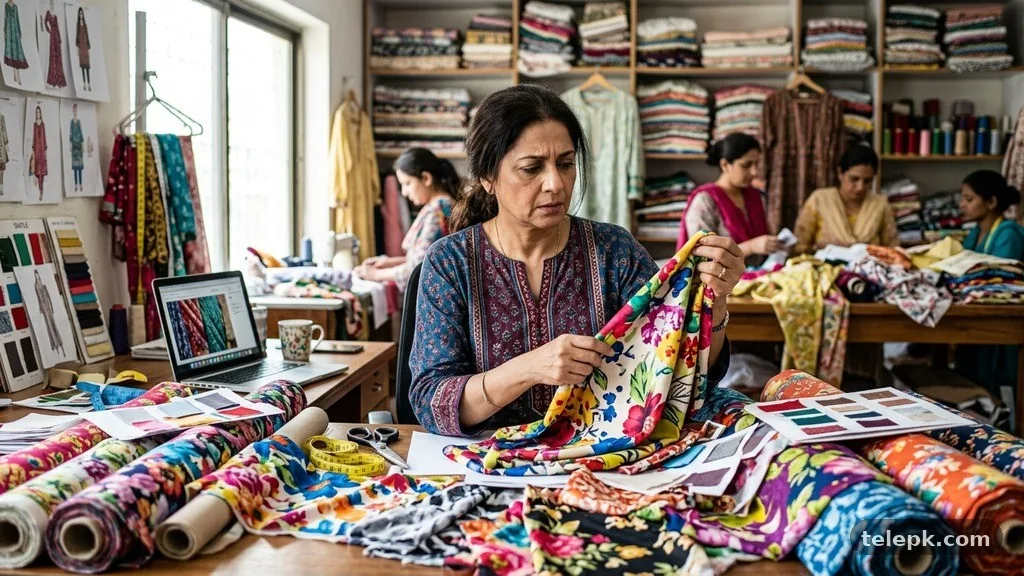
Large motifs can dominate a garment, particularly when they cover the bodice, sleeves, and trousers at the same time. Smaller prints may look more restrained, but neither approach is automatically better. The effect depends on the cut, fabric, styling, and image quality.
Colour coordination
Some viewers may object to high-contrast colours or combinations that feel dated to them. Others may see the same palette as festive or culturally familiar. Colour preference is one of the least objective parts of fashion criticism.
Fabric and finishing
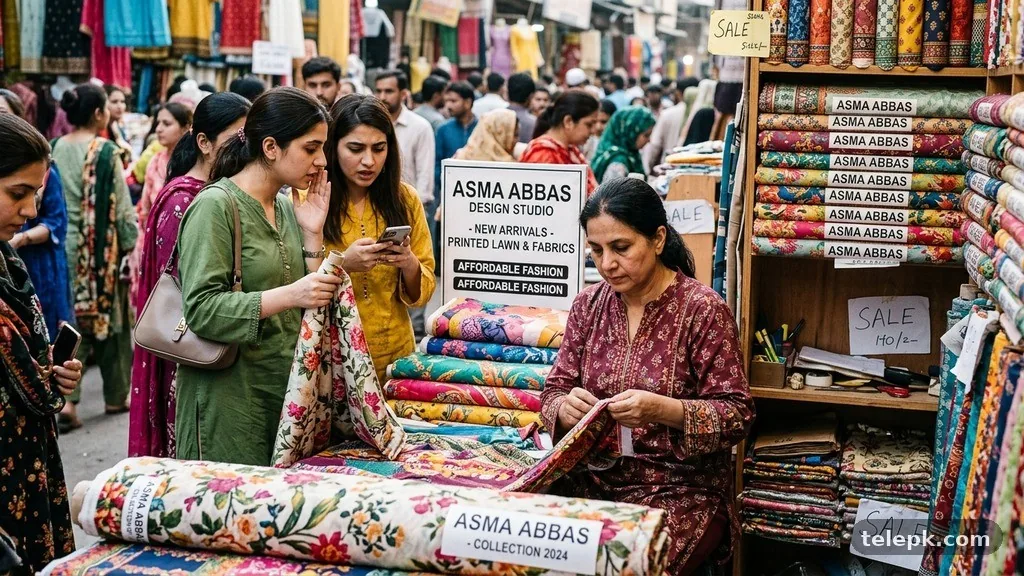
A photograph can suggest how a garment falls, but it cannot reliably establish fabric weight, stitching quality, comfort, or price. Claims about construction should therefore be treated cautiously unless the garment or designer has been documented in detail.
Styling choices
Jewellery, footwear, hair, makeup, and tailoring can change how a printed outfit is perceived. Sometimes online criticism aimed at a dress is really a reaction to the complete styling rather than to the design itself.
Could the Criticism Affect Asma Abbas’s Career?
One viral fashion discussion is unlikely to provide a meaningful measure of an actor’s professional standing. Acting work is judged across performances, roles, audience response, and industry opportunities, while clothing criticism is usually brief and highly dependent on social media momentum.
It is also important not to confuse online visibility with universal approval or disapproval. A post may receive attention because people are arguing, not because everyone shares the same opinion. Unless there is a confirmed statement or professional consequence, claims about career damage remain speculation.
Frequently Asked Questions
Who is Asma Abbas?
Asma Abbas is a Pakistani actress known for work in television and film. She is also frequently covered by entertainment media for public appearances and family-related celebrity interest.
Why are people criticising Asma Abbas’s designs and prints?
The criticism appears to focus on the perceived look of clothing associated with her, including print choices, colours, styling, or finish. The word “cheap” is an opinion and does not prove anything about the garment’s actual price or quality.
Is the controversy confirmed by Asma Abbas?
A social media trend or entertainment headline does not automatically represent an official response. Unless Asma Abbas or a verified representative addresses the matter, claims about her reaction should be treated as unconfirmed.
Who is Asma Abbas’s husband?
That is a separate personal-life question and should be answered using reliable, publicly documented sources. Fashion criticism posts are not sufficient evidence for relationship details.
What is Asma Abbas’s latest drama?
Her latest project can change as new dramas are announced or released. Readers should check official broadcaster, production, or verified cast information rather than relying on a recycled social media caption.
Final Verdict
The discussion around Asma Abbas being trolled again for her designs and prints appears to be driven mainly by subjective reactions to fashion imagery. Calling an outfit “cheap” may capture a commenter’s personal taste, but it does not establish the garment’s price, quality, designer, or intent. Those details need reliable context.
The sensible takeaway is to separate confirmed entertainment news from viral opinion. Enjoy the fashion debate if it interests you, but avoid treating insults, reposts, or speculation about Asma Abbas’s family and career as verified fact. A clearer image, original source, and direct statement matter far more than a catchy headline.